Kalamazoo Drainage Pros: French Drain Installation and Yard Drainage in Kalamazoo, MI
Kalamazoo Drainage Pros is a drainage contractor licensed and insured in Michigan, serving Kalamazoo and Kalamazoo County. We install french drains, clear soggy yards and standing water, correct grading and slope, bury downspout lines, set catch basins and dry wells, run exterior drain tile and footing drains, and route sump pump discharge. We work on houses, older homes in the city neighborhoods, newer subdivision homes, and commercial sites.
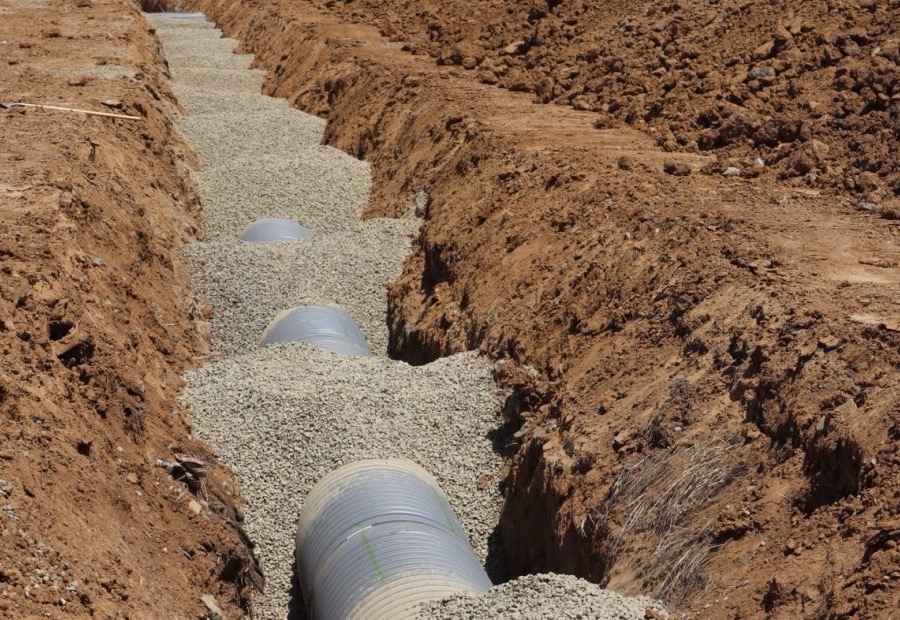
A french drain is a trench holding a perforated PVC pipe, wrapped in geotextile filter fabric, bedded in washed #57 stone, and sloped to daylight, a dry well, or a sump. The fabric works like a sock and keeps silt out of the pipe. A gravel-only trench, dug with no fabric and no fall, loads up with clay fines and quits draining after a few winters.
Call for a Free Estimate- Licensed and insured in MI
- Locally owned, not a franchise
- Perforated PVC wrapped in filter fabric
- Sloped to daylight, a dry well, or a sump
- Serving all of Kalamazoo County
French Drain Installation
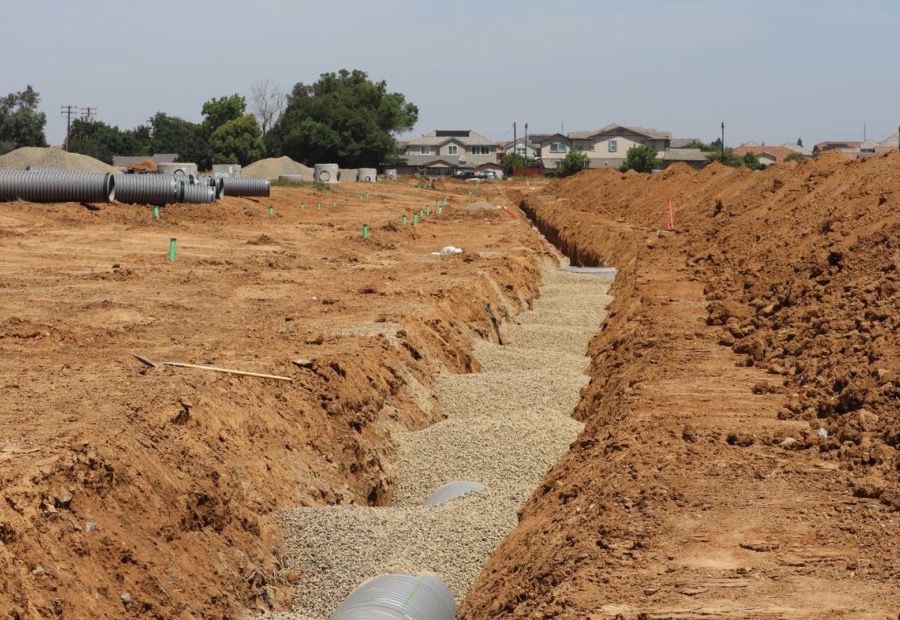
A french drain takes on water that has already worked into the ground. We open a trench along the wet line, set a perforated pipe in the bottom, and hold a steady fall toward a lower outlet. Water in the soil reaches the stone, drops into the pipe, and runs off to daylight, a dry well, or a sump. The trench gathers the water and the slope walks it away.
The pipe rests in washed #57 stone, and the trench is wrapped in geotextile filter fabric. The fabric passes water while it holds the clay fines back, so the stone stays open and the pipe stays clear. Kalamazoo sits on heavy clay, and clay is exactly what seals a gravel-only trench shut. More on french drain installation.
Yard and Surface Drainage
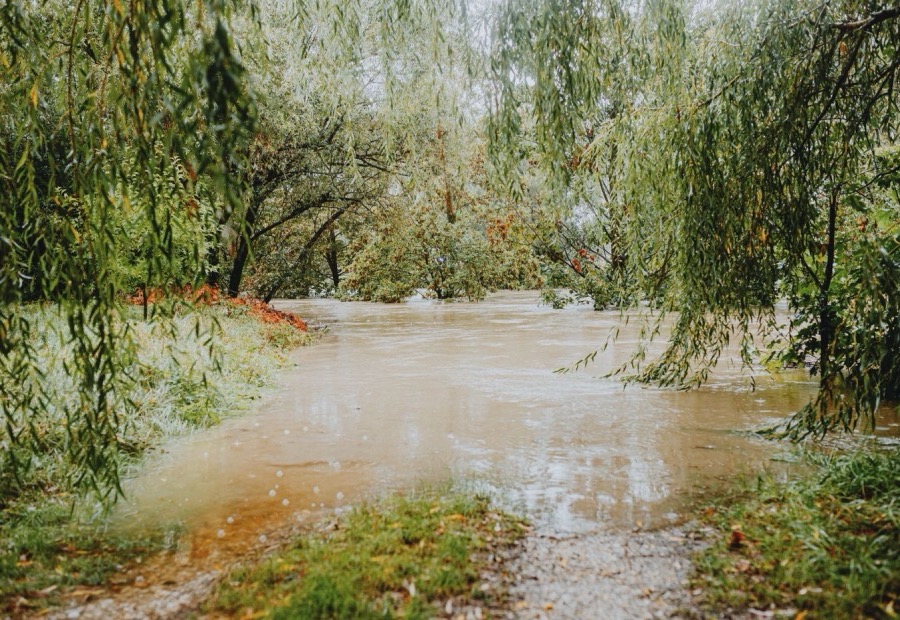
Some water never soaks away. It stands on the lawn after every rain, in the same low corners, until the sun takes it. That is surface water. It is a grading and collection problem, not a buried-pipe problem. A yard that holds water kills grass, breeds mosquitoes, and carries mud to the door.
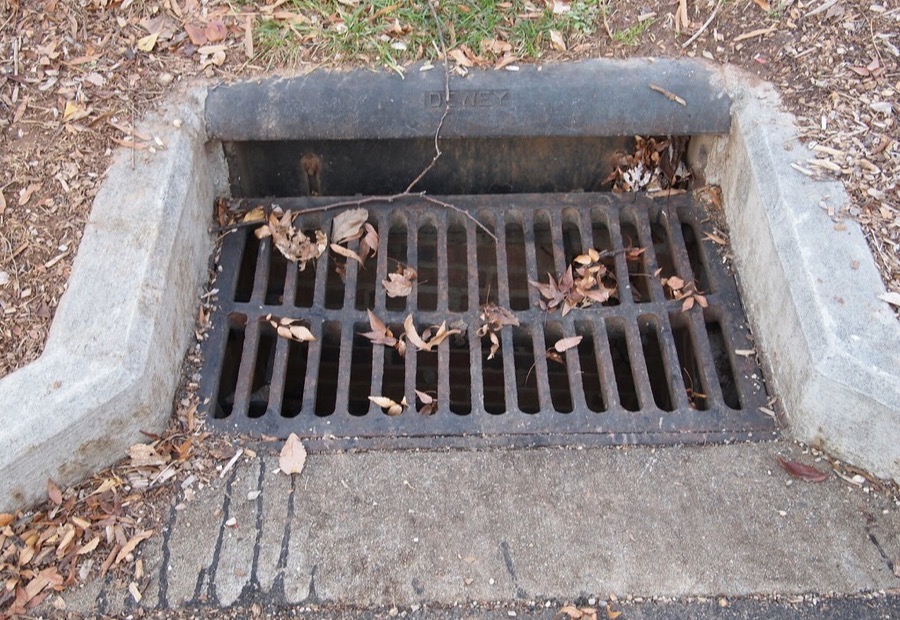
We handle surface water with catch basins, channel drains, and regrading. A catch basin is a grated box that swallows water at the low point and pipes it off. A channel drain does the same across a driveway or a patio. Where the ground itself pitches the wrong way, we reshape it so the water leaves. More on yard drainage.
Drainage Grading and Slope
The ground beside a house is meant to fall away from it. When it does, rain heads out toward the yard instead of down against the basement. Roughly six inches of drop across the first ten feet keeps water off the foundation. New subdivisions in Portage and Texas Township are graded that way on the day they are built.
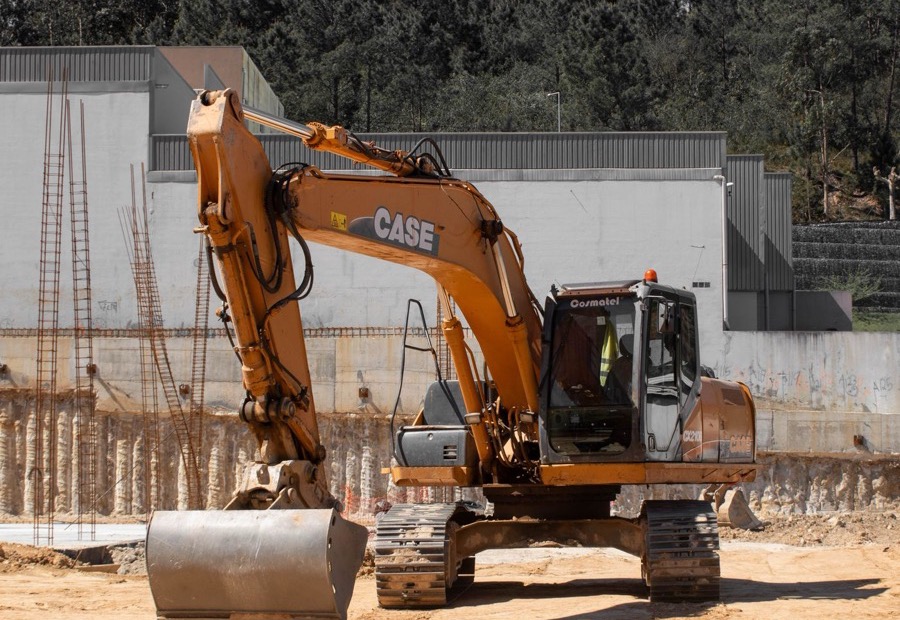
Clay settles, and settled ground tips back toward the house. Then the same rain runs at the wall it used to run away from. We rebuild the grade in the strip around the foundation and cut swales, shallow shaped channels that lead water along a chosen path to a lower outlet. On clay, a swale does a pipe's work without the pipe. More on drainage grading.
Downspout and Gutter Drainage
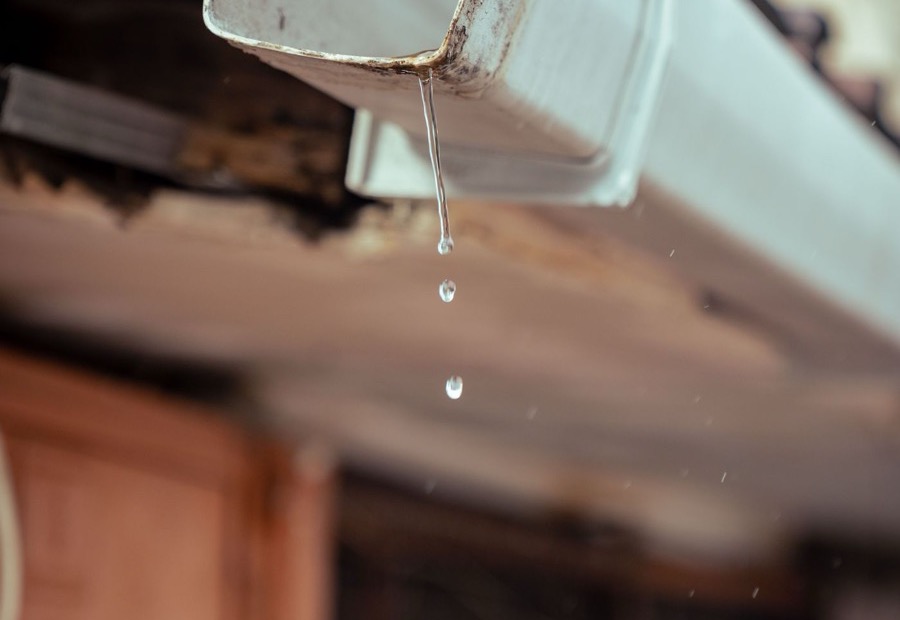
A roof sheds a great deal of water, and the gutters push all of it into a few downspouts. When a downspout ends at the foundation, it dumps that water against the wall, storm after storm and thaw after thaw. Downspouts letting out at the foundation are the most common reason a Kalamazoo basement takes on water.
We bury the downspout line in solid PVC and carry it out to a pop-up emitter, well clear of the house. Solid pipe moves the roof water and does not let it seep back in, so it is not perforated like a french drain. The emitter lifts open under pressure and drops flat once the flow stops. More on downspout drainage.
Catch Basins and Dry Wells
A low spot in a yard keeps water because it has no way to move it on. A catch basin gives it an exit. The basin is a grated box set at the low point. Water falls through the grate and leaves through a pipe. Driveways, patios, and the foot of a sloped lawn are the usual places for one.
Where there is no lower ground to reach, a dry well stores the water instead. A dry well is a buried chamber packed in washed stone and wrapped in filter fabric, and it holds the water while it soaks into the soil below. On tight Kalamazoo clay we size the well for how slowly the ground will take water. More on catch basins and dry wells.
Exterior Drain Tile and Footing Drains
Water that gathers at the base of a foundation has to leave, or it leans on the wall and finds a way in. A footing drain is a perforated pipe run around the outside of the footing to catch that water and carry it off. Builders call the pipe drain tile. It is a french drain set down at the foundation.
We take foundation water from the outside, in washed stone and geotextile fabric, sloped to daylight or a sump. That is a separate job from an interior basement system, where a company opens the floor inside and fits a perimeter channel and a sealed pump. We keep the water off the wall before it ever reaches the inside. More on exterior drain tile.
Sump Pump Discharge Lines
A sump pump lifts water out of the pit and pushes it outside through a discharge line. The pump is only half the system. If the line lets go right next to the house, the water soaks back down to the pit and the pump moves it again. The discharge has to carry the water off and release it where it will not come back.
We run the discharge on a fall to a pop-up emitter out in the yard, or to daylight on a slope. In a Kalamazoo winter a flat line freezes solid, backs the water up, and leaves the pump straining against a plug of ice. We slope the line and protect the run so it drains and clears in the cold. More on sump pump discharge lines.
Commercial Drainage
A parking lot, a warehouse yard, or an apartment block sheds water the same way a house does, over a much larger surface. More pavement means more runoff with nowhere to soak in. Water pools in the lot, floods a low bay, or runs at a building that was set too low.
We build catch-basin arrays, channel drains, and larger french and area drains for commercial sites, piped to a lawful outlet. The work can be staged after hours so a lot stays open through the day. The method is the one we use on a house: gather the water, wrap the stone in fabric, and slope the line to somewhere it can leave. More on commercial drainage.
Why Kalamazoo Homeowners Choose Us
- We wrap the pipe in filter fabric. Clay fines are what plug a drain. Every french drain and footing drain we build is bedded in washed #57 stone and wrapped in geotextile fabric, so the silt stays out and the pipe stays open. Start with french drain installation.
- We separate surface water from foundation water. A soggy lawn and a wet basement are two different problems. One wants regrading and catch basins, the other wants a buried drain. We tell you which one you have before we dig.
- We start at the downspouts. Roof water dropped at the wall wets more Kalamazoo basements than anything else. We bury the downspout lines to a pop-up emitter before anyone sells you something bigger.
- Every line runs to a real outlet. A drain with no fall is a buried trough. We slope each line to daylight, a dry well, or a sump discharge, so the water leaves the yard.
- Exterior work, written up first. We take foundation water from outside with drain tile and footing drains. You get a written estimate before any work starts.
Built for Kalamazoo's River Valley and Clay
Kalamazoo sits in a river valley on low, flat ground. The Kalamazoo River runs through the middle of the county, and the land around it drains slowly. Water stays close to the surface here. The soil under most of the area is heavy clay, and clay holds water rather than passing it on.
Then there is the snow. Kalamazoo takes lake-effect snow off Lake Michigan all winter, and a February thaw can drop a season of it onto ground that is already soaked from rain. Meltwater and rain arrive together, the clay cannot drink it fast enough, and it runs to the lowest ground it can find. The fix is never to make clay drain. The fix is to give the water a built path out, in pipe and stone, sloped to somewhere lower.
The towns around Kalamazoo split by their age and where they sit. Portage, Oshtemo, and Texas Township are newer subdivisions cut into graded clay, where settling and downspouts do most of the damage. Galesburg, Parchment, and Vicksburg are older communities down in the river valley, with aging drainage and a high water table. Comstock and Richland run more rural, with country lots and longer runs to an outlet. The clay and the snowmelt stay the same. The outlet is what changes lot to lot.
Our 5-Step Drainage Process
Diagnosis
We find where the water stands, where it comes from, and where the ground can send it. Surface water and foundation water get sorted out here. You get a written estimate with the scope and price before any digging.
The Outlet
Every drain needs a lower place to let out. We locate daylight, a dry well site, or a sump first, then set the fall from the wet spot to that outlet.
Trench and Grade
We dig the trench or reshape the ground to a steady slope. Depth and fall are checked as we go, because a drain that runs level does not run at all.
Pipe, Stone, Fabric
Perforated pipe goes in on washed #57 stone, wrapped in geotextile filter fabric. Solid pipe carries downspout and sump water. The fabric keeps the clay out of the stone.
Backfill and Restore
We backfill, reset the grade, and finish at a pop-up emitter or a clean outlet. We haul the spoil off and leave the yard graded to drain.
Drainage Cost in Kalamazoo
These are real price ranges for Kalamazoo and Kalamazoo County, not invented numbers. What you pay comes down to the length of the run, how deep it has to go, how far the outlet is, and whether we hit clay or an old line on the way. Every job gets a free written estimate before work starts.
| Service | Typical Range | Notes |
|---|---|---|
| French drain installation | $2,000 - $6,000 | Length, depth, and distance to the outlet set the price |
| Yard regrading and catch basins | $1,500 - $5,000 | More for several basins and long pipe runs |
| Downspout burial, per line | $300 - $800 | Solid pipe to a pop-up emitter, per downspout |
| Dry well | $1,500 - $4,000 | Sized to how slowly the soil takes water |
| Exterior footing drain / drain tile | $4,000 - $12,000 | Excavation around the foundation drives the cost |
| Sump pump discharge line | $500 - $1,500 | Sloped and freeze-protected to daylight or an emitter |
Small jobs, like burying a pair of downspouts, start a few hundred dollars. A full exterior footing drain around a wet foundation runs into five figures, because the digging is the job. The thing that moves the price most is the outlet. If water can run to daylight on a slope, the line is cheap. If it has to reach a dry well or a sump, there is more pipe and more ground to open.
What moves the price:
- Length of the run and how deep it sits to catch the water
- How far the water travels to a legal outlet, and whether that outlet is daylight, a dry well, or a sump
- Digging around a foundation, which costs more than an open-yard trench
- Clay that has to be hauled off instead of spread on site
- Restoring lawn, driveway, or patio the trench had to cross
Pipe, Stone and Fabric
Perforated Versus Solid Pipe
A french drain uses perforated pipe, slotted so groundwater can enter all along the run. A downspout or sump line uses solid pipe, so the water it carries stays inside until the end. Corrugated pipe lays fast, but its ridged wall traps sediment. Smooth-wall PVC runs cleaner and rods out if it ever needs it. We match the pipe to the job.
Geotextile Filter Fabric
Filter fabric is the part most gravel trenches skip. It wraps the stone and the pipe like a sock, passing water while it blocks the clay fines that would pack the voids shut. A non-woven fabric is what keeps a drain working for decades instead of a few years.
Washed #57 Stone
The stone around the pipe has to be washed and open-graded so water moves through it freely. Washed #57 is a clean, angular stone with wide gaps between the pieces. Bank-run gravel with sand and dirt still in it chokes the drain from the day it goes in. Washed stone stays open.
Pop-Up Emitters and Daylight
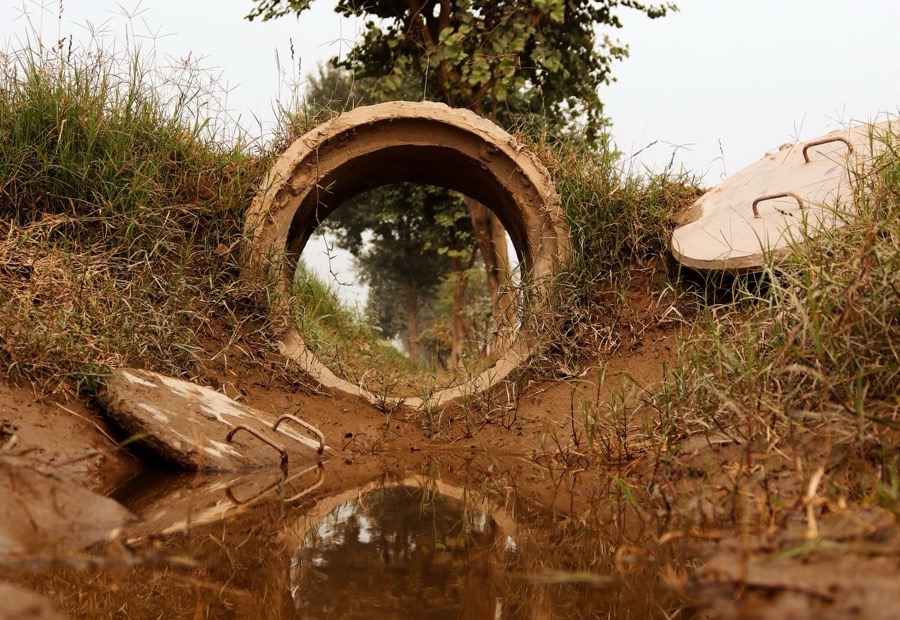
A drain has to end somewhere. The best outlet is daylight, where the pipe opens on a lower slope and lets the water out. On flat lots we finish at a pop-up emitter, a lid that lifts under pressure to release the water and drops shut when the flow stops, so nothing crawls back up the pipe.
What We Use on Kalamazoo Lots
For most Kalamazoo yards, perforated PVC in washed #57 stone, wrapped in non-woven filter fabric and sloped to a pop-up emitter, is the drain that lasts on clay. Down in the river valley, where the water table sits high, the depth and the outlet get more attention. We read the lot and tell you what it needs.
Frequently Asked Questions
What is a french drain?
It is a trench with a perforated pipe in the bottom, bedded in washed #57 stone and wrapped in geotextile filter fabric, sloped so the water it collects runs to a lower outlet. Groundwater moves through the stone, into the pipe, and off to daylight, a dry well, or a sump. The fabric keeps the clay out so the pipe does not silt up. More on french drains.
Why is my yard always soggy in Kalamazoo?
Two things at once. The soil is heavy clay that holds water instead of passing it, and much of the valley is flat and low, so the water has nowhere to run. Winter snowmelt piles more water on top of that. The fix depends on which water you have: pooling on the surface wants regrading and catch basins, water down in the ground wants a buried drain.
Why does my basement get wet when it rains?
Most of the time it is roof water. A downspout ending at the foundation pours hundreds of gallons against the wall during a storm, and the ground next to the house may pitch back toward it. We bury the downspouts and rebuild the grade along the wall before looking at anything bigger, because that clears up most wet basements on its own.
Do you do interior basement waterproofing?
No. We handle foundation water from outside, with exterior drain tile and footing drains, buried downspouts, and grading. Interior systems that open the basement floor and set a perimeter channel are a separate line of work sold by other companies. Our aim is to keep the water off the wall before it reaches the inside.
How deep does a french drain go?
Deep enough to sit below the water it is meant to catch, and no deeper than the outlet will allow. A drain pulling groundwater off a foundation runs lower than one collecting a soggy surface. Depth is tied to fall: the pipe still has to slope down to its outlet, so the outlet sets how deep the far end can be. We work both out on site.
Will a french drain clog over time?
It clogs when it is built wrong. A pipe laid in clean washed stone and wrapped in filter fabric keeps the fines out and stays open for decades. A pipe dropped in dirt, or in gravel with no fabric, packs with clay and quits in a few years. The fabric and the washed stone are the difference between a drain that lasts and one that fails.
Where does the water actually go?
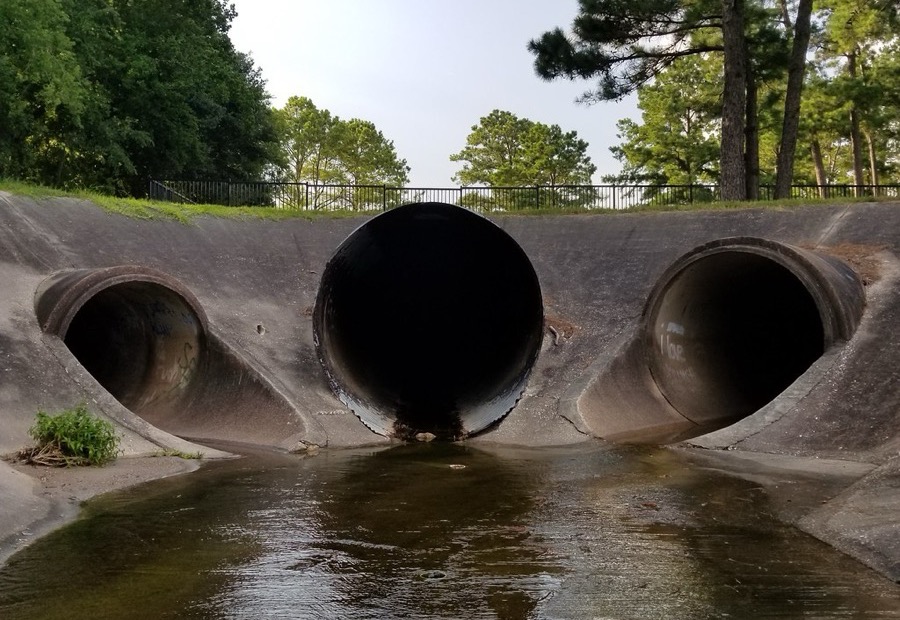
To the lowest outlet the lot allows. Best is daylight, where the pipe opens on a slope and the water runs out on its own. On flat ground we send it to a dry well that stores it while it soaks in, or tie it to a sump that pumps it out. No drain works without a place for the water to leave.
Can you fix standing water without tearing up the whole yard?
Often, yes. A single low spot may only need a catch basin and a short pipe to a better outlet. A strip that slopes wrong may only need regrading. We trace where the water sits and where it can go, then fix that path instead of trenching the whole lawn. See yard drainage for how we handle surface water.
My sump pump runs constantly. Can you help?
We work on the discharge, not the pump itself. A pump that empties the pit onto the ground beside the house is feeding its own pit, so it never gets a rest. We run the discharge line on a slope to a pop-up emitter or daylight, well clear of the foundation, and protect it against freezing in winter.
Do you bury downspouts?
Yes. We tie each downspout into a solid PVC line buried below the surface and run it out to a pop-up emitter in the yard, far from the wall. Solid pipe keeps the roof water moving instead of letting it seep out along the way. It is the cheapest drainage fix on most houses and often the most useful. See downspout drainage.
When is the best time of year for drainage work in Kalamazoo?
Spring through fall is easiest, and a wet week is actually the best time to diagnose, because we can watch where the water goes. We dig through most of the year. Deep winter frost is the one real stopper, since frozen clay is hard to trench and grade. A late thaw that floods a basement gets handled when it cannot wait.
Are you licensed and insured?
Yes. We are a licensed and insured drainage contractor working across Kalamazoo and Kalamazoo County. Requests through this site are routed to a local, licensed, and insured drainage contractor who will contact you directly. You get a written estimate before any work begins.
Serving Kalamazoo and Kalamazoo County
We install drains and clear flooding throughout Kalamazoo and the towns around it in Kalamazoo County. Every town sits a little differently, down in the river valley or up on graded clay, and the drainage each one needs follows the ground. We know the difference.
Ready to Get the Water Handled?
Call (269) 350-2548 for a free estimate. Tell us where the water shows up: a soggy lawn, a spot that ponds after every rain, a wet basement, a downspout running at the wall, or a sump that never rests. Tell us where it seems to come from and which way the ground falls. You will get a straight read on what is happening and what the fix costs. We will tell you when the job is small and when the water needs a real drain. No pressure and no fine print, just a clear answer from someone who works Kalamazoo clay.