Landscape and Yard Drainage in Kalamazoo, MI
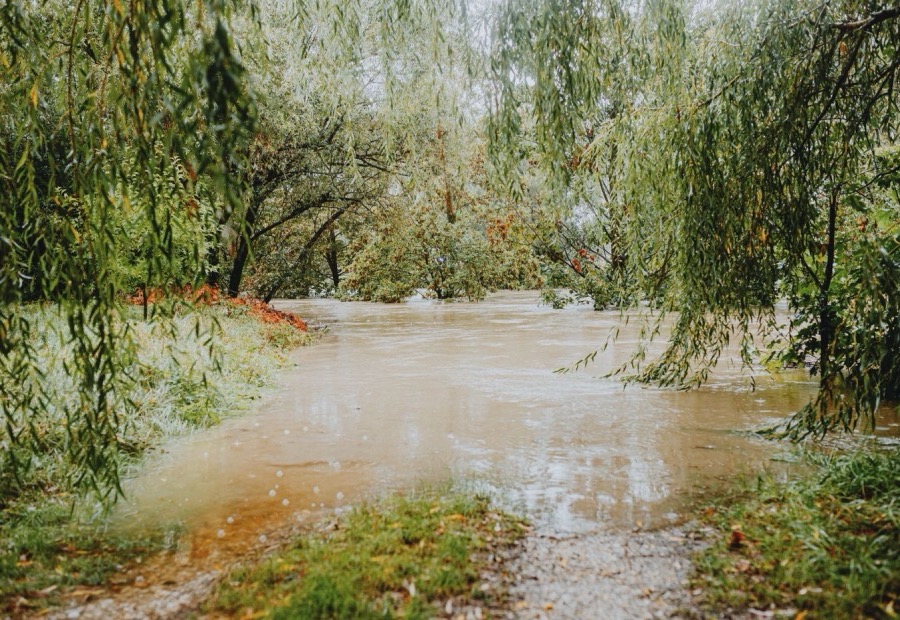
Kalamazoo Drainage Pros clears standing water and soggy lawns across Kalamazoo and Kalamazoo County, Michigan. We are a licensed and insured drainage contractor, and yard drainage is the call we take most. Low spots, pooling after rain, and a lawn that stays wet for days are surface-water problems, and we fix them with catch basins, channel drains, and regrading.
A catch basin is a grated box that swallows water at the low point and pipes it to a lower outlet. A channel drain does the same across a driveway or a patio. Where the ground itself falls the wrong way, we reshape the grade so the surface sheds. Water sitting on the lawn is not the same problem as water trapped in the soil, and it does not want the same buried drain.
People call this work landscape drainage, yard drainage, or just a wet lawn. It is one job. Rain lands on your lot and the lot gives it nowhere to go. We find the lowest place the water can legally reach, then build the shortest path to it.
Surface Water, Not Groundwater
The first question is where the water is. Surface water pools on top, runs off once the ground dries, and turns up in the same low spots every storm. Groundwater keeps a spot spongy long after the surface looks dry, and that one calls for a french drain. We read which you have, because a surface fix on a groundwater problem leaves the yard just as wet.
You can read most of it yourself. Walk the wet spot two days after a storm. If the surface is dry and firm, you had surface water. If your shoe still prints and water rises in the print, the soil is holding it. Moss and thin grass say the same.
What Landscape Drainage Covers
Landscape drainage moves water across the lot. It is not the system that protects a foundation from the inside. A few parts work together. Catch basins take water at the low points. Solid PVC or smooth-wall pipe carries it. Grates and risers set the collection height. A pop-up emitter or a daylight outlet lets it out at the far end. One wet corner needs one basin and a short run. A back slope, a patio, and a driveway apron need several inlets on one line.
Catch Basins for the Low Spots
A yard usually has one or two places the water heads for. We set a catch basin at each, a box with a grate flush to the grade, and pipe it out to a lower outlet. The grate takes leaves and debris on top so the line stays clear. On a lot with several low spots, the basins tie into one pipe that carries the whole flow to daylight or a dry well.
The box sits below the pipe outlet on purpose. That gap is a sump, and silt drops into it instead of into the line. Lift the grate once a year and scoop it out. That is the whole maintenance. A bare pipe end skips the box and packs with grit.
Channel Drains Across Hard Surfaces
Driveways, patios, and walkways shed all their water to one edge, and it often runs back at the house or floods a low corner. A channel drain is a long slotted trough set into the surface that catches that sheet of water across its whole width. It is the right tool where a single grate cannot keep up with a paved run.
The trough gets set in concrete and pitched so water walks to one end. The frame has to finish flush, or a snow blade catches it. On a driveway we use a load-rated grate. A light plastic grate folds under a truck.
Regrading the Low Ground
Sometimes the ground just falls the wrong way. Settling, an old fill, or a patio built too high sends water where it should not go. We cut and reshape the grade so the surface drains along a path we choose, toward a swale or a basin. Regrading moves the water with the shape of the land instead of a pipe, which is the cheaper fix when it will work.
Regrading fails on some lots. A dish in the middle of a flat yard has to be filled, and the fill comes from somewhere. Raise one corner and you may push water at a fence line. Mature trees set a hard limit, because piling soil over roots kills the tree. Where the shape cannot change, pipe does the work. Where the ground leans back at the house, that is grading work.
How a Landscape Drainage Job Runs
The order matters more than the parts. Every lot gets the same sequence.
1. Look at the lot. We walk it and ask where the water runs during a storm. Phone photos taken in the rain tell us more than a dry yard does.
2. Shoot the grade. We measure real elevations with a laser level. Clay lots read flat to the eye and are not.
3. Find the outlet. Nothing gets dug until we know where the water ends up. Daylight on a slope is first choice. A dry well or a pump comes next. A run with no outlet is a buried bathtub.
4. Locate what is buried. MISS DIG 811 marks the public utilities free. It does not cover private lines. Irrigation, invisible fence, landscape lighting, and a gas line to a garage are yours, so tell us what is there.
5. Mark the run. We paint the trench line and the basin locations on the grass. You approve the layout before a shovel moves.
6. Lift the sod and dig. Sod comes up in strips and waits in the shade. A mini excavator or a trencher runs the line where a gate and the ground allow it. Tight access means hand digging. Spoil rides on boards or in a dump trailer.
7. Set the pipe and the basins. Pipe goes in on a steady fall, checked as we lay it. Basins get set to final grade so a mower rides over the grate. Joints get glued or gasketed, not taped.
8. Backfill and compact. The trench gets filled in layers and tamped. Loose backfill settles into a rut over the first winter.
9. Restore and test. The sod goes back, or we top with soil, seed, and straw. Then we run a hose into the top basin and stand at the outlet until water comes out. We haul the spoil off and clean the hard surfaces.
What the Yard Looks Like When We Leave
You will see a seam. A restored trench line reads as a strip of new sod or fresh seed, a few inches to a foot wide. Laid sod knits in through one growing season. Seed takes longer. By the second summer the line is hard to find. Grates sit flush at the low spots. The outlet shows at the far end, either a pop-up emitter in the lawn or a pipe end on the slope. A pop-up stays closed until water pushes the lid up, so it mows over clean.
Expect some settling. A backfilled trench drops a little over the first months, and we come back to top-dress the low line. Machine ruts on a soft lawn get raked out and seeded.
When a Drain Is the Wrong Answer
Not every wet yard should be piped. Grading is cheaper than digging, so we grade first wherever grading will do it. A shallow dish that holds water for a day needs soil and a shovel, not a basin. Pipe earns its cost over distance the surface cannot carry.
A french drain is the wrong fix for water sitting on top of the lawn. Perforated pipe in stone collects water that moves through soil. Ponded water on clay soaks down slowly, so it sits on the grass while the drain below waits. An open grate takes the same water in seconds. Buried collection pipe belongs where soil holds water against a foundation, which is footing drain territory.
Some limits are not ours to remove. Drainage does not lower a water table. A lot low in the Kalamazoo River valley stays soft in a wet spring no matter what we bury in it. We pull standing water off the surface. We cannot dry the ground under it. We also cannot send it to the neighbor. If the lot has no lower ground, the water goes to a dry well or a pump, and both cost more than daylight.
A drain will not fix packed clay with no life in it either. That is core aeration and topdressing, and it is a lawn job. And a system sized for ordinary rain still backs up under a storm that drops a summer's worth in an hour. A yard that drains in an hour instead of five days is a fixed yard.
What It Costs
Yard drainage in Kalamazoo runs about $1,500 to $5,000. A single catch basin with a short pipe sits low. Several basins, a long pipe run, or a wide regrade sits higher. The outlet matters as much as the collection: water that can reach daylight is cheaper to handle than water that needs a dry well. Every yard gets a free written estimate first.
Piped work gets priced by the linear foot of trench, plus a price per basin or inlet. That is how to read any landscape drainage quote, and it lets you compare two of them line by line. Ask for the footage, the number of inlets, the pipe type, and the outlet. A lump sum with none of that behind it compares to nothing.
Six things move the number on a Kalamazoo lot:
- Soil. Wet clay digs slow and makes spoil that has to be hauled. Sand is faster and cheaper.
- Slope. Natural fall lets the pipe run shallow. A flat lot forces the trench deeper the further it goes, and depth is dig time.
- Distance to the discharge. Every foot to the outlet is pipe, trench, and restoration. Usually the biggest single driver.
- Obstructions. Tree roots, a sprinkler system, a fence, or a driveway to cross all add work. Cutting and patching concrete costs far more than crossing lawn.
- Machine access. A gate wide enough for a mini excavator changes the job. Hand digging a long run is the largest swing on the list.
- Restoration. Seed and straw is the low option. Sod costs more and looks finished the day we leave.
Tired of a lawn you cannot mow for days after it rains? (269) 350-2548 gets you a free look. If the grade around the house is part of it, we handle the grading too. If roof water is feeding the low spot, we bury the downspouts in the same visit.
Why does water stand in my yard after every rain?
The ground is holding it. Kalamazoo clay takes water in slowly, and a low or flat spot has nowhere to send what will not sink in. So the water sits until it evaporates. The fix is to give it a path, either a catch basin and pipe to a lower outlet, or a regrade that lets the surface shed toward one.
What is a catch basin?
A grated box set at the low point of a yard. Surface water falls through the grate, collects in the box, and leaves through a pipe run to a lower outlet. It is the simplest way to drain a spot that ponds, like the bottom of a slope, a patio edge, or a driveway apron.
Can you fix a soggy lawn without a full french drain?
Often, yes. If the water is sitting on top rather than trapped in the soil, it does not need a buried collection pipe. A catch basin at the low spot, a channel drain across a hard surface, or a regrade to move the water along is usually enough. We look at where the water sits and where it can go before deciding.
Will regrading kill my grass?
Regrading reshapes the soil surface, so the worked area is disturbed and then reseeded or sodded. We keep the disturbed strip as tight as the fix allows. The trade is a short stretch of new grass for a lawn that drains, instead of one that stays wet and thin from standing water.